点上方“上海社会科学院”关注
Addressing Legal Issues for Foreign Enterprises in China and Chinese Firms Going Global
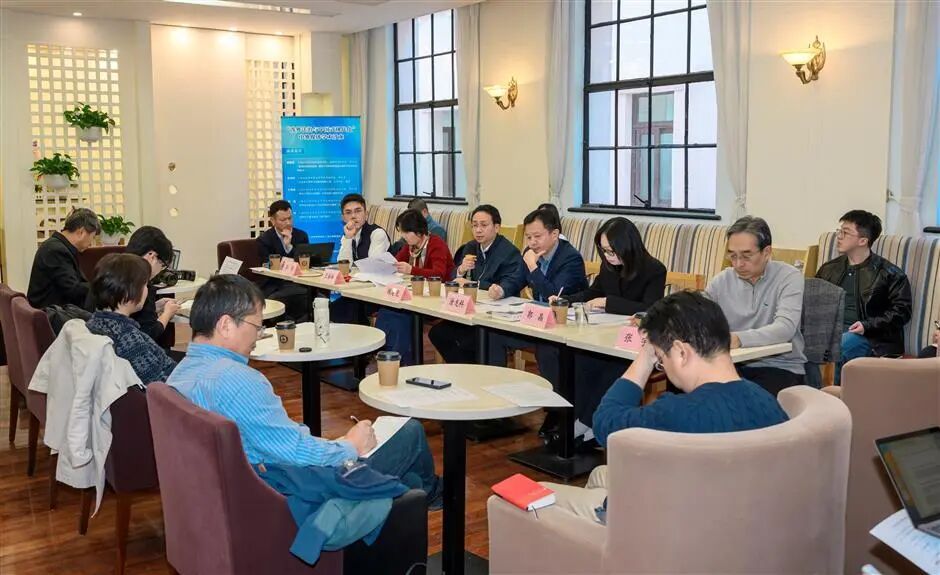
Legal experts explored the legal challenges confronting foreign enterprises operating in China and Chinese companies doing business overseas during an academic forum held yesterday at the Shanghai Academy of Social Sciences.
Yao Jianlong, director of the Shanghai Academy of Social Sciences Institute of Law, stated that foreign-related legal topics have long been integrated into law school curricula. He emphasized that these subjects are increasingly recognized as key drivers of a robust legal environment – one that fosters reform and sustainable development.
In the past, debate was rife over whether foreign-related laws should be classified as part of general domestic law. Today, a broad consensus has emerged: Foreign-related laws are an integral component of China's socialist legal system with Chinese characteristics.
"Rule of law and opening-up go hand in hand," Yao stated. "As China's opening-up efforts gain greater momentum, the development of the socialist rule of law must keep pace."
He added that the rule of law should serve as a systemic guarantee for high-quality development, highlighting its role in mitigating risks, stabilizing market expectations, and ensuring reforms stay on the right track.
Credit: Ti Gong
Caption: Experts share ideas on foreign-related legal issues at the Shanghai Academy of Social Sciences.
Yao stressed that modern rivalry between major powers rarely manifests in direct armed conflict. Instead, it often plays out through competitions over rules and legal frameworks, tariff policies, and the abuse of long-arm jurisdiction.
"We must proactively respond and safeguard national and public interests through means of law – all while contributing to the advancement of the rule of law on a global scale," he said.
He further pointed to a second critical consideration: As Chinese enterprises become more and more involved in cross-border economic and trade activities, addressing the complexities of disputes and enhancing coordination in their resolution has become imperative.
"We need efficient adjudication mechanisms that facilitate the fair settlement of cross-border disputes," Yao said. "This will ensure all parties perceive the trials as fair and just."
He also underscored the importance of providing legal services to Chinese enterprises expanding overseas.
By the end of 2024, Chinese investors had established 52,000 enterprises across 190 countries and regions, with approximately 70 percent of these ventures operating profitably or breaking even.
"Protecting these overseas investments and the rights of Chinese citizens involved is both a key task and a significant challenge," he noted.
However, Yao highlighted a pressing shortage of legal professionals competent in handling foreign-related legal matters, emphasizing the urgency of addressing this gap.
Tu Longke, deputy director of the Shanghai Academy of Social Sciences Institute of Law, echoed the link between rule of law and opening-up.
"Only when rule of law advances in step with opening-up can we create a stable, fair, and transparent business environment," he said.
This, in turn, he added, would enable Shanghai to play a pivotal role in global resource allocation and accelerate the development of the city's "five centers" – an international economic center, financial center, trade center, shipping center, and science and technology innovation center.
Wang Haifeng, a researcher from the institute, noted three emerging trends in foreign investment in China: a shift from traditional manufacturing to high-end manufacturing; growing reliance on mergers and acquisitions as an investment model, accompanied by more diverse hybrid equity structures; and a strategic pivot from focusing solely on manufacturing in China to prioritizing both the Chinese market and in-country innovation.
上海日报记者:Wan Lixin
来源:City News Service
制作审核:院党委宣传部
(院科研成果传播办公室)
责任编辑:刘苁有

扫码关注
上海社会科学院积极响应中央加强中国特色新型智库建设的号召,以构建国内一流、国际知名的社会主义新智库为目标,大力实施智库建设和学科发展的双轮驱动发展战略,努力成为哲学社会科学创新的重要基地,成为马克思主义中国化的坚强阵地,成为国内外学术交流的主要平台,成为具有国内外重要影响力的国家高端智库。